Live Zoom Childcare Training
Professional preventive health and safety training for daycare providers, childcare workers, preschool staff, family childcare home providers, assistants, directors, and people preparing for California childcare licensing or employment.
Live Zoom
Tue & Thu, 11 AM
$100
Registration Required
A convenient Zoom childcare training class with practical safety topics.
Attend from home, work, or another quiet location with internet access.
The course is taught live every Tuesday and Thursday at 11:00 a.m.
A clear, affordable fee for preventive health and safety training.
Submit your name, phone number, and email to receive the next steps.
Health and Safety Training Center offers Preventive Health and Safety Training for daycare providers who need clear, practical, and professional training for working in a childcare setting. This course is designed for childcare providers, daycare workers, preschool staff, family childcare home providers, assistants, directors, and anyone preparing to meet California childcare training requirements.
Our Preventive Health and Safety course is taught live on Zoom every Tuesday and Thursday at 11:00 a.m. The course fee is $100, and students can register online by submitting their name, phone number, and email. After registration, students will receive the next steps for attending the live Zoom training.
This course is part of the required health and safety training path for childcare providers. In California, childcare providers are commonly required to complete training that includes Pediatric CPR, Pediatric First Aid, and Preventive Health and Safety practices. Our program can be combined with 8 hours of CPR/First Aid training and 8 hours of Preventive Health and Safety training to help daycare providers prepare for licensing, employment, and safe childcare operations.
Preventive Health and Safety training is important because daycare providers are responsible for protecting young children from illness, injury, unsafe environments, and preventable health risks. Children in childcare settings are still developing. They need adults who understand how to prevent the spread of germs, respond to health concerns, recognize possible dangers, and maintain a safe classroom or home-based childcare environment.
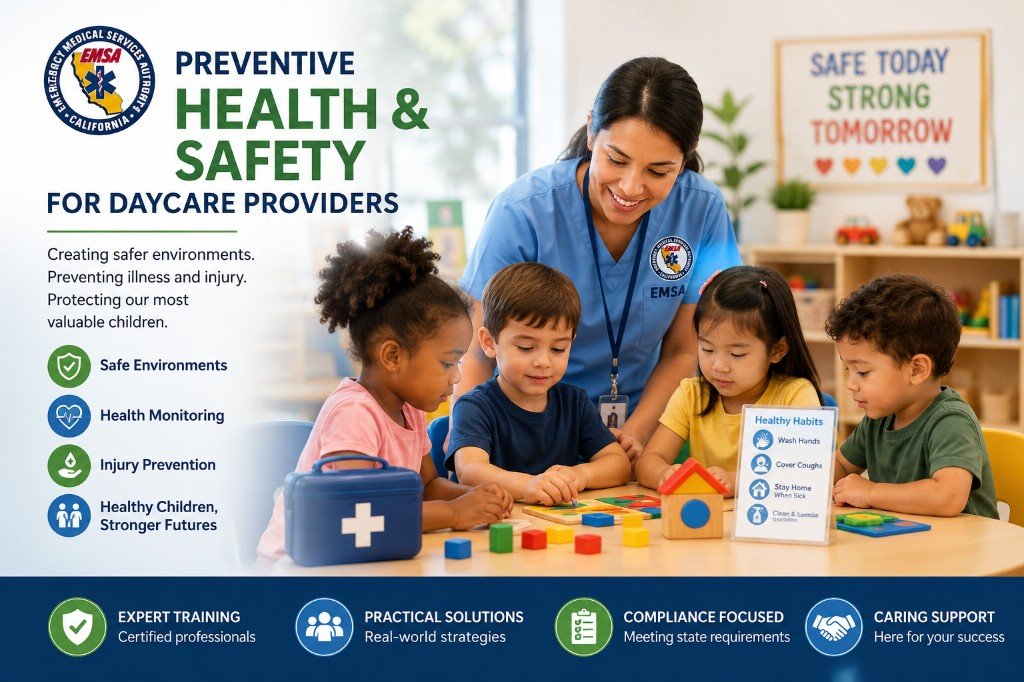
Practical safety topics for California daycare provider training.
Proper handwashing, cleaning and disinfecting, safe diapering practices, food safety, recognizing signs of illness, and knowing when a child may need to stay home.
Identifying unsafe toys, choking risks, playground dangers, unsafe sleep environments, sharp objects, cleaning chemicals, blocked exits, and other risks.
Childcare nutrition, age-appropriate foods, hydration, choking prevention, food allergies, safe food handling, and healthy habits.
Where lead may be found, how to reduce exposure, and why screening and prevention guidance matters for children.
Health documentation, parent communication, accurate records, and childcare health procedures.
Written parent permission, proper storage, correct labeling, emergency medications, allergy action plans, and careful documentation.
Supporting children with special health considerations, asthma awareness, allergic reactions, and family communication.
Planning for emergencies, using classroom layout and safety checks, and maintaining clear response procedures.
Sanitation, safe sleep practices, safe environments, and written safety policies that help childcare programs stay consistent.
During this course, students learn about infection control and illness prevention. This includes proper handwashing, cleaning and disinfecting, safe diapering practices, food safety, recognizing signs of illness, and knowing when a child may need to stay home. These practices help reduce the spread of germs in daycare centers, preschools, and family childcare homes.
The course also covers injury prevention. Childcare providers learn how to identify hazards before accidents happen. This may include unsafe toys, choking risks, playground dangers, unsafe sleep environments, sharp objects, cleaning chemicals, blocked exits, and other risks that can affect young children. Providers also learn how supervision, classroom layout, safety checks, and emergency planning can reduce preventable injuries.
Another major part of the course is nutrition and healthy development. Students learn why healthy meals and snacks matter for growing children. The training can include information about age-appropriate foods, hydration, choking prevention, food allergies, safe food handling, and the importance of building healthy habits early in life. Nutrition is not just about feeding children. It is also about supporting growth, learning, behavior, and long-term wellness.
The course also includes lead poisoning prevention, which is a serious topic for childcare providers. Lead exposure can harm a child's brain, growth, and development. Providers learn where lead may be found, including older paint, dust, soil, plumbing, imported items, and some household products. The training helps childcare providers understand how to reduce exposure, keep environments cleaner and safer, and recognize why families should follow health guidance related to lead screening and prevention.
Students also learn about immunization awareness and health records. Childcare providers need to understand the importance of health documentation, parent communication, and policies that help protect children in group care. While providers are not doctors, they do play an important role in keeping accurate records and following childcare health procedures.
Preventive Health and Safety training may also discuss medication safety in childcare. This includes the importance of written parent permission, proper storage, correct labeling, emergency medications, allergy action plans, and careful documentation. Medication mistakes can be dangerous, so childcare providers must follow clear safety procedures.
The course also introduces important topics such as children with special health needs, emergency preparedness, asthma awareness, allergic reactions, sanitation, safe sleep practices, and communication with parents. Providers may also learn how written policies help childcare programs stay organized and consistent.
At Health and Safety Training Center, our goal is to make this training easy to understand and useful in real childcare settings.
We want students to leave with practical knowledge they can use right away. Whether you are opening a family childcare home, working in a daycare center, renewing your skills, or preparing for employment, this course gives you the foundation to help keep children safe and healthy.
Health and Safety Training Center is here to help daycare providers build safer childcare environments, protect children from preventable risks, and meet important training expectations with confidence.
California childcare providers generally need health and safety training that includes Pediatric CPR, Pediatric First Aid, and Preventive Health and Safety practices.
This Zoom childcare training can be combined with 8 hours of CPR/First Aid and 8 hours of Preventive Health and Safety training for daycare providers.
Our live Zoom format makes the class convenient and accessible. Since the course is live, students can ask questions, follow along with the instructor, and receive guidance throughout the training.
To register for the Preventive Health and Safety Training for Daycare Providers, complete the online sign-up form with your name, phone number, and email. The course is $100 and is offered every Tuesday and Thursday at 11:00 a.m. on Zoom.
Register for the live Zoom Preventive Health and Safety course for daycare providers.
Register Now